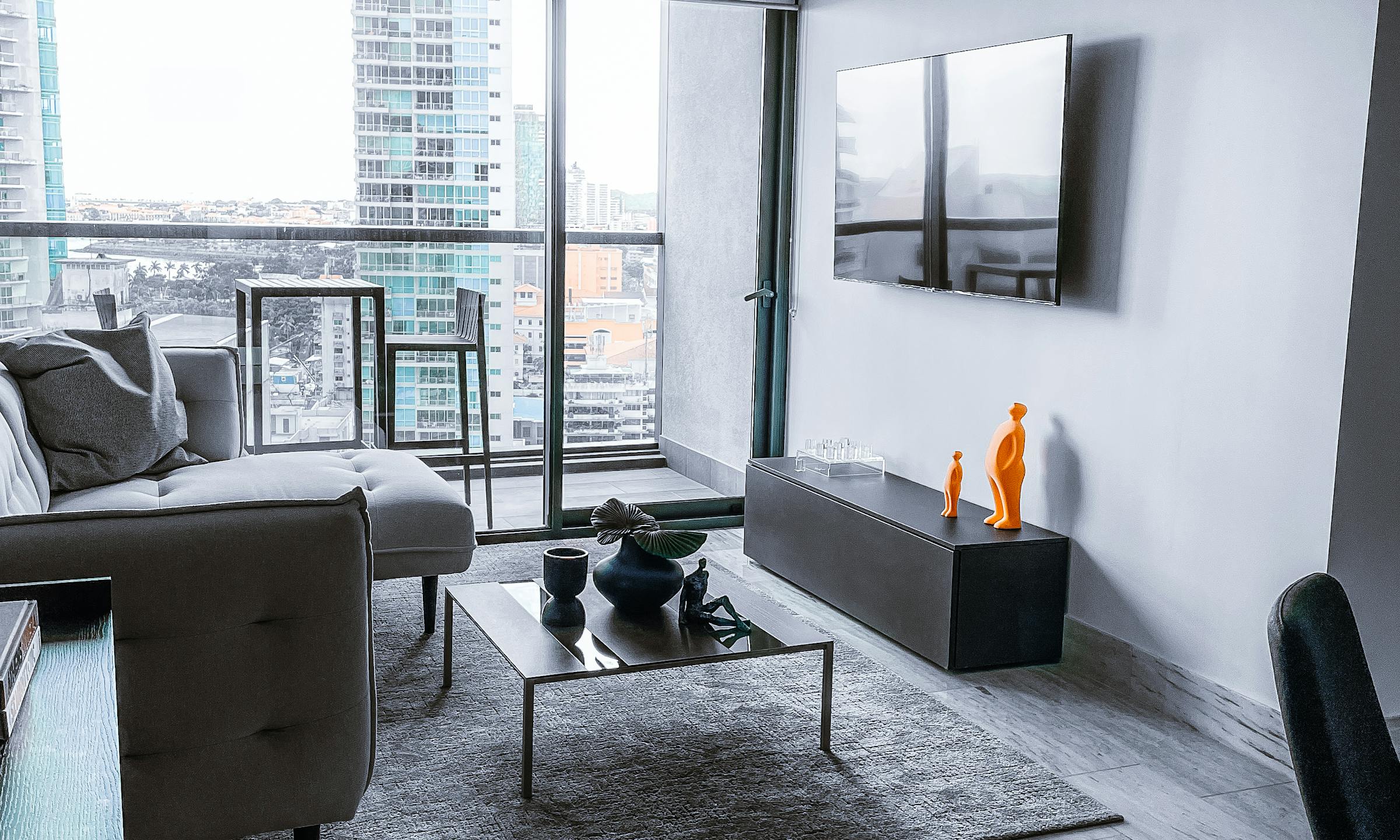
If you design along Panama’s Pacific Riviera, salt air and cross-breeze humidity can quietly drain your time and your margin. A single dry season can corrode hardware and warp millwork, turning a beautiful hand-off into a series of costly replacements. Most studios already manage these environmental risks across custom spreadsheets, local supplier catalogs, and WhatsApp threads long before a formal system enters the picture.
Alcove at a glanceCentralize dimensions, finishes, and spec data per product.
Designing for Coronado and Gorgona means balancing beautiful ocean views with relentless coastal elements. When a penthouse living room sits open to the Pacific breeze, the line between interior and exterior specifications disappears. To protect your design and your client's investment, every finish must be specified with the local microclimate in mind — so you can spend more time on design decisions and less on chasing vendors for replacement parts.
The reality of Pacific-coast exposure in Coronado and Gorgona
Alcove at a glanceKnow where every item stands from selection through install.
The Pacific Riviera experiences two distinct seasons: the dry, windy verano (December to April) and the humid, rainy invierno (May to November). During the dry season, strong trade winds blow salt spray directly off the Gulf of Panama. If a condo features a classic cross-breeze layout, this salty air drafts through the entire home.
Standard residential specifications that perform well in Panama City will fail three floors above the beach in Coronado. Salt crust accumulates on surfaces within hours. When the rainy season arrives, the relative humidity inside an unconditioned condo can hover above 90% for weeks. This cycle of salt accumulation followed by high humidity accelerates oxidation and wood movement. To prevent premature failures, you must treat every interior finish as if it were exposed to the outdoors.
The hardware math: Specifying marine-grade metals
Standard plated brass, chrome, or low-grade stainless steel — such as Grade 304 — will pit, tea-stain, and rust within twelve months of exposure to Pacific cross-breezes. For any property within two miles of the coast, your hardware schedule must specify Grade 316 stainless steel (marine grade) or solid brass finished with Physical Vapor Deposition (PVD).
Clients often push back on the initial cost of marine-grade hardware. Showing them the lifecycle math helps clarify the investment.
Let us look at a typical specification for a three-bedroom beachfront condo in Gorgona requiring 14 sets of interior door levers and matching hinges.
-
Option A: Standard Plated Brass (Grade 304/Zinc Alloy base)
- Hardware cost: $65 per set
- Subtotal: $910
- Estimated lifespan: 18 months before pitting and binding
- Replacement cost at Year 2 (new hardware + local labor): $1,410
- Total cost over 5 years (with two replacements): $3,730
-
Option B: Grade 316 Marine-Grade Stainless Steel with PVD Finish
- Hardware cost: $215 per set (sourced from a specialist commercial supplier)
- Subtotal: $3,010
- Estimated lifespan: 15+ years
- Replacement cost: $0
- Total cost over 5 years: $3,010
By specifying the correct alloy upfront, you save the client money and prevent the operational headache of coordinating mid-project replacements when hinges begin to squeak and bind.
Managing the moisture: Performance fabrics and dry-season occupancy
Many beachfront condos in Coronado serve as secondary homes. When owners return to North America or Europe for the wet season, they often turn off the air conditioning to avoid Panama’s high electricity rates. The condo sits closed, warm, and highly humid for months.
Under these conditions, standard cotton, linen, or down-blend cushions become breeding grounds for mold.
To protect your upholstery designs:
- Specify solution-dyed acrylics: Brands like Sunbrella or Perennials are not just for the pool deck. Use them for indoor sofas, dining chairs, and drapery. They resist moisture, will not rot, and can be cleaned with diluted bleach if mold spores settle during the empty months.
- Specify reticulated foam: Swap standard polyurethane foam inserts for open-cell reticulated foam (such as EZ-Dri). This foam allows air and moisture to pass through rather than trapping it inside the cushion core.
- Avoid natural wallcoverings: Grasscloth, paper-weave, and unbacked silks trap moisture behind them — leading to peeling and mold growth on drywall. Stick to lime-wash plaster, high-quality low-VOC acrylic paints, or moisture-rated commercial vinyls if a textured wall is required.
Flooring and millwork that survives the salt-air draft
The extreme swing between dry-season drafts and wet-season humidity causes rapid expansion and contraction in wood.
Engineered wood flooring is highly risky in beachfront Panama properties. The adhesive layers can delaminate when exposed to constant humidity cycles, and the softwood core can swell, causing the floor to buckle. Instead, specify large-format porcelain tile. To prevent the grout lines from absorbing salt and turning white or crumbly, specify a non-porous epoxy grout rather than standard cementitious grout.
For millwork and furniture, look to local tropical hardwoods. Species like Teak, Almendro, and Amargo contain natural oils that resist rot, termites, and moisture movement.
When specifying cabinetry for kitchens and vanities, avoid medium-density fiberboard (MDF) or standard plywood cores. Even "moisture-resistant" green MDF will eventually swell at the edges when exposed to salt air. Specify marine-grade plywood or solid PVC board cores for vanity cabinets, finished with exterior-grade polyurethane coatings.
How to track exposure ratings and replacement cycles in your specs
When managing a large coastal project, keeping track of which items require marine-grade finishes, PVD coatings, or outdoor-rated foam can get messy. If these details are buried in email threads or general spreadsheet columns, a purchasing agent or contractor might order the standard residential version by mistake.
You do not need to abandon your existing workflow or start your project documentation from scratch. Alcove lets you attach custom exposure tags, marine-grade finish requirements, and replacement cycles directly to your product specs. You can manage these details right alongside your quotes, approvals, and POs — so your team and contractors stay aligned.
By keeping these environmental requirements tied directly to the product data, you can generate client proposals and purchase orders that clearly state the required performance ratings. This ensures the correct materials are ordered, delivered, and installed on-site.
Price with clarity. Install with confidence.
See how we do it at alcove.co.
FAQs
What is the best metal finish for beachfront condos in Panama?
Grade 316 stainless steel (marine grade) and solid brass with a Physical Vapor Deposition (PVD) coating are the most reliable options. Standard chrome, brushed nickel, or low-grade stainless steel will quickly pit and rust due to the high salt content carried by the Pacific cross-breezes.
How do you prevent mold in Coronado condos during the vacant wet season?
Specify moisture-resistant materials like solution-dyed acrylic fabrics, open-cell reticulated foam cushions, and solid wood or aluminum cabinetry. Advise clients to run dehumidifiers or set their AC units to a 'dry' cycle while away, and avoid natural wallcoverings like grasscloth that trap moisture.
Can you use engineered wood flooring in beachfront Panama properties?
It is highly risky. The extreme humidity fluctuations between the dry and wet seasons can cause engineered wood to swell, cup, or delaminate. Large-format porcelain tile or local tropical hardwoods like Teak are much more stable and durable alternatives for this climate.
See how Alcove does this
See how Alcove helps you track environmental specs, marine-grade finishes, and custom vendor notes in one organized workspace.